When selective trimming helps
Contact us about dead or broken branches, rubbing limbs, clearance over a drive or walkway, or growth touching a roof. Describe the specific concern rather than requesting a fixed percentage of canopy removal. Trimming should address a need while retaining enough healthy foliage to support the tree.
What the assessment considers
Species, age, branch attachments, canopy density, past cuts, visible decay, and nearby targets help determine which branches to retain or remove. Timing also matters: heat, drought stress, and oak-wilt precautions can change the recommendation. Paint fresh oak wounds immediately year-round; do not wait for an appointment or form reply.
Agree on the branches and objective
Available trimming work includes selective removal of dead, damaged, crossing, or overgrown branches and appropriate clearance work. Confirm the intended cuts, clearance goal, and trees included in the estimate. A request to make a tree smaller may require a different approach; topping and excessive foliage removal can create lasting problems.
Access and the property below the canopy
Identify roof edges, fences, parked vehicles, irrigation, planting beds, and areas people use beneath the tree. Gate width and equipment access can affect how branches are reached and lowered. Discuss access routes and protection measures before work; do not assume lawn restoration is included. Branches near utilities need separate safety review.
Clarify cleanup before approving work
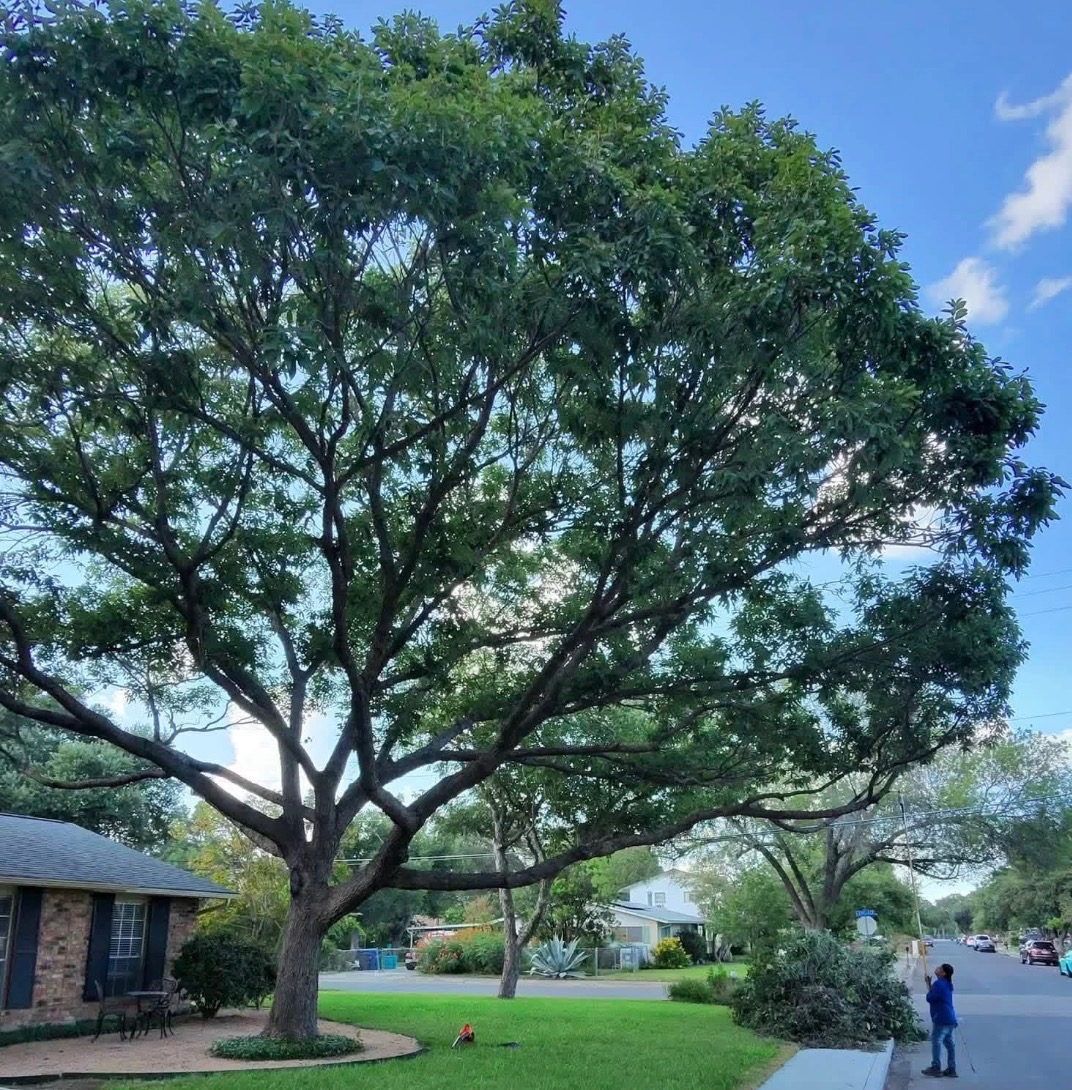
Ask whether cut branches will be stacked, processed, or hauled away, where any retained wood should go, and what final cleanup covers. The presence of a chipper or debris truck in a photo does not establish the scope of your job. List agreed debris handling and any exclusions in the estimate.
What affects a trimming estimate
The service objective, tree size and condition, number of trees, height and position of branches, access, nearby structures and utilities, and equipment needs affect the work plan. Debris scope, urgency, and applicable property or municipal requirements also matter. Photos can help describe the request, but do not establish a final price.
Customer questions
How often should a tree be trimmed?
There is no universal schedule. Species, growth, condition, previous work, and clearance needs determine whether trimming is useful now or monitoring is more appropriate.
Is trimming different from manicuring?
Trimming usually addresses specific branches or clearance. Manicuring combines selective pruning and shaping for structure and appearance; discuss the objective rather than relying on the label alone.
Can trimming fix a damaged or declining tree?
Removing a damaged branch may help, but trimming does not resolve every root, disease, or structural problem. An inspection or risk assessment may be the better first step.
Is debris hauling included?
Only if it is included in the agreed estimate. Confirm handling of limbs, logs, chips, and the final work area before approving the scope.