
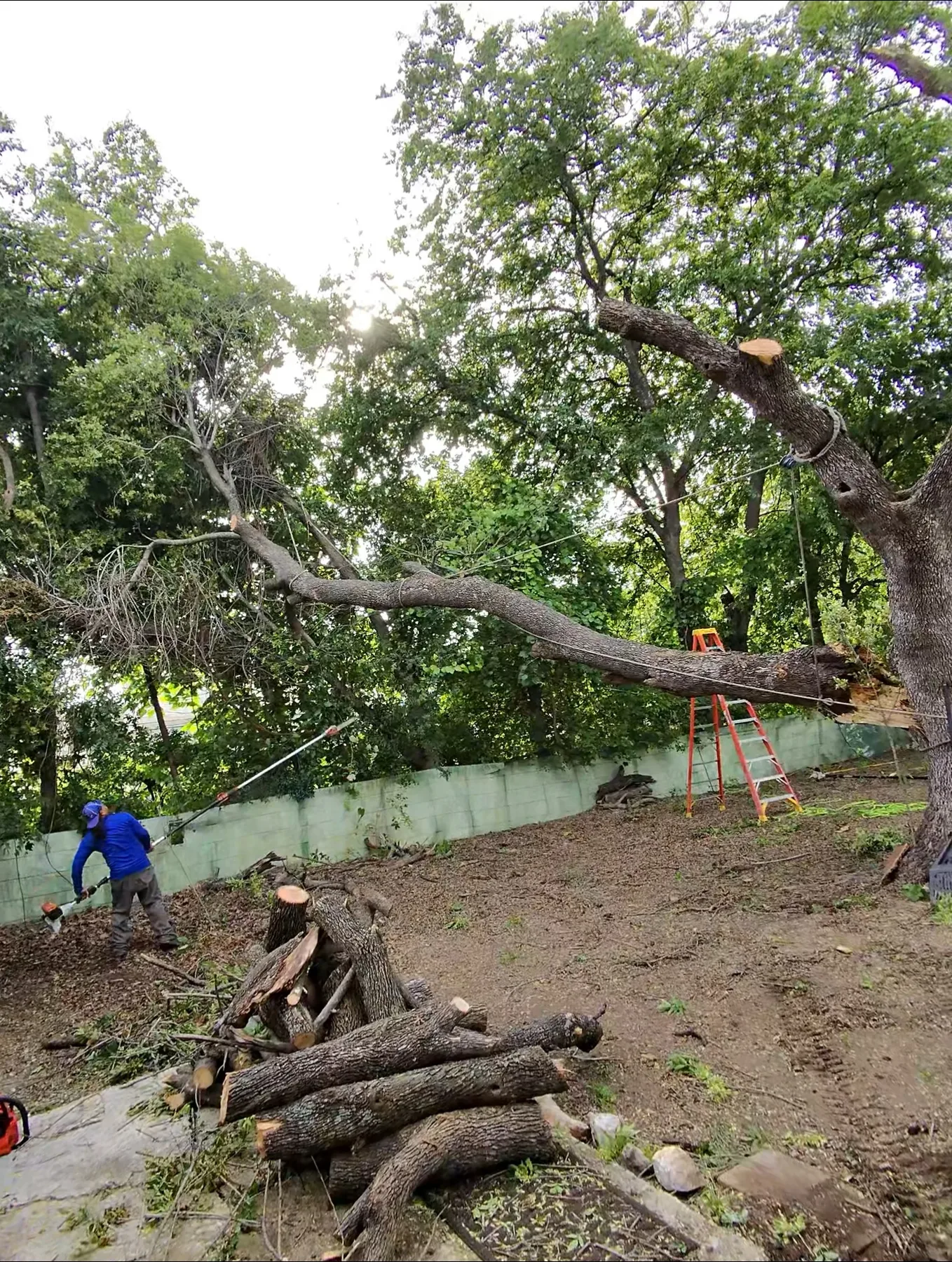
When to request a removal assessment
Dead trees, substantial storm damage, major splits, root movement, or a tree interfering with a structure can justify an assessment. Visible symptoms do not always mean removal is necessary. Describe what changed and what could be affected if the tree or a large limb fails; stay out of a potentially hazardous area.
Preservation or removal?
An assessment considers tree condition, visible defects, remaining structure, surrounding targets, and whether pruning or monitoring could address the concern. Removal may be appropriate when preservation is not practical or risk cannot reasonably be reduced. Photographs alone cannot establish that a tree is safe or that it must be removed.
Define the removal scope
Discuss which trees or failed sections are included, how the work area can be isolated, and whether controlled section removal or other equipment is needed. Work is subject to the agreed estimate and site conditions. Stump grinding, root removal, replacement planting, and lawn restoration are separate questions—not assumed parts of tree removal.
Plan access and protection
Tell us about narrow gates, overhead lines, roofs, fences, pools, irrigation, and underground features you know about. Space for lowering sections and positioning equipment can affect the plan. Confirm access permission, protection measures, and any municipal or property-management requirements before work. Utility coordination is not an assumed inclusion.
Logs, branches, chips, and the remaining stump
Specify whether material is to stay on the property or leave it, what size or stacking arrangement is expected for retained wood, and what cleanup is included. Ask how stump height and remaining surface material will be handled. Put debris hauling and any separate stump service in writing rather than relying on gallery equipment photos.
What affects a removal estimate
Service type, tree size and condition, number of trees, access, proximity to structures and utilities, equipment needs, and the agreed debris scope all influence an estimate. A brittle, split, or suspended tree can require a different approach than a sound tree in open space. Urgency and applicable requirements also affect planning; no price is established by this page.
Customer questions
Does a leaning tree need to be removed?
Not necessarily. A longstanding lean differs from a sudden change with lifted soil or root movement. Keep clear of a newly unstable tree and request an assessment.
Does removal include the stump?
Do not assume so. Confirm stump height, whether any grinding or root work is available, and its separate scope before approving the estimate.
Who checks permits or property restrictions?
Ask which requirements apply at your address and who is responsible for approvals. Do not assume a permit or an HOA approval is unnecessary or included.
What if a tree is touching a power line?
Stay away and contact the utility provider. Do not touch the tree or connected objects or attempt cutting before the electrical hazard has been addressed.