
Oak Wilt Prevention in San Antonio
Caring for San Antonio’s oaks starts before the next cut. Texas Arborist helps homeowners and property managers understand pruning precautions, new injuries, and changes in tree health—with recommendations based on the tree and the surrounding property.
Fresh oak wound or pruning cut? Paint it immediately, year-round, as each cut is made. Do not wait for a form response. Do not climb or approach hazardous limbs.
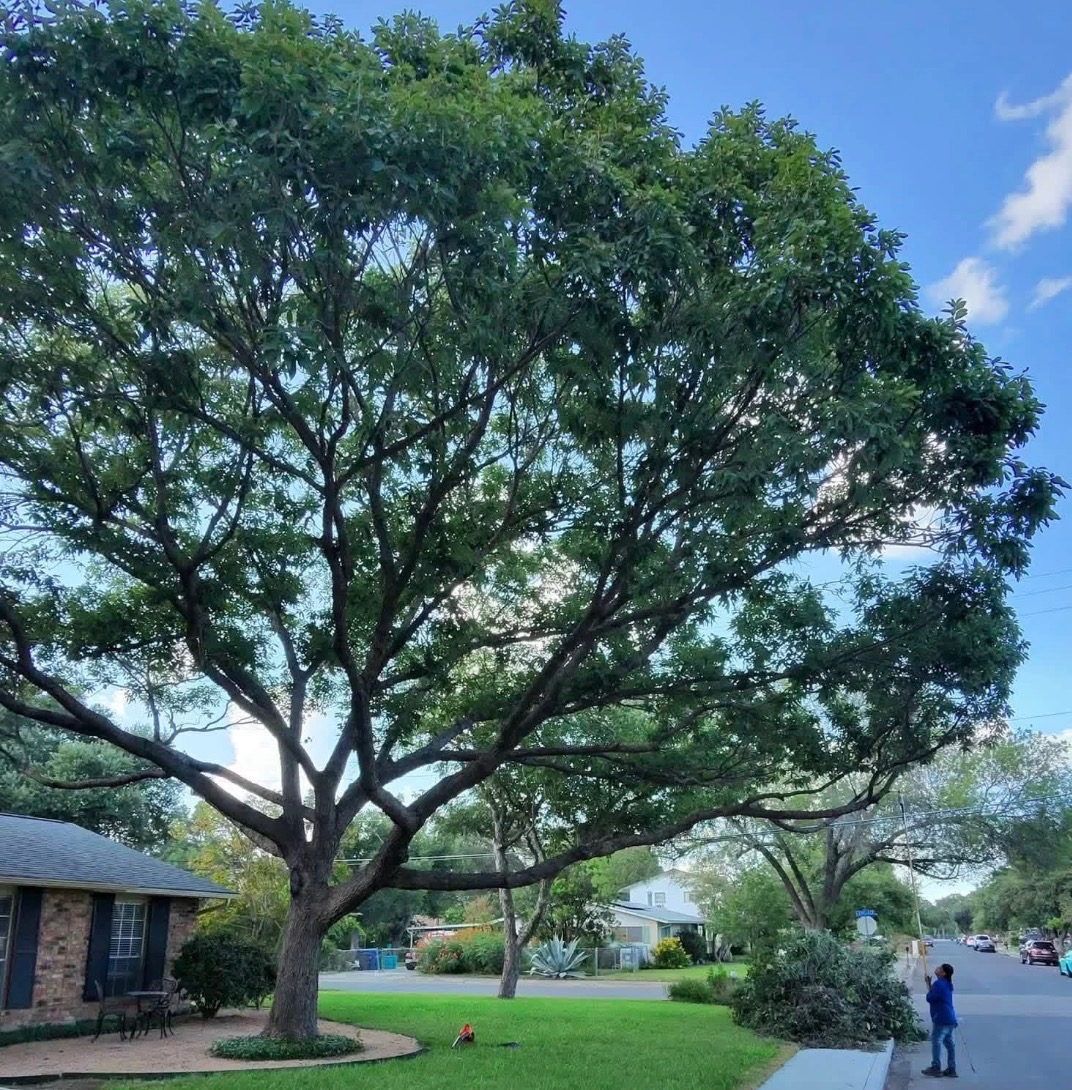
Tree-care work from our gallery. A photo alone cannot establish a tree’s species, diagnose oak wilt, or show that disease prevention was successful.
When to Contact Us
Upcoming oak pruning
Planning cuts on an oak? Talk to us first so timing and wound protection are settled before anyone picks up a saw.
Fresh oak injuries
Torn limbs, storm breaks, mower or vehicle damage. Paint the wound right away, then ask us to assess the tree.
Nearby oak wilt
A suspected or confirmed case on your street, next door, or elsewhere on the property.
Canopy or leaf changes
Sudden browning, leaf drop, or thinning. These can have several causes, and we will help sort through them.
Timing, Paint, and Firewood
Oak wilt is a fungal disease that disrupts an oak’s water-conducting tissues. It can spread when insects carry the fungus to fresh wounds, or underground through connected roots. Prevention needs to account for both pathways.
Avoid routine oak pruning and wounding from February through June. Safety-related work may be needed. Whenever a cut is made, in any month, paint each cut as it is made.
Paint reduces insect-mediated infection risk. It is not a cure or a guarantee, and it does not stop root-connected spread. Most non-oak cuts do not need dressing, and dressing does not speed wound closure or prevent decay.
- Handle firewood carefully. Avoid moving unseasoned wood from infected red oaks; fungal mats can form on stored wood and attract insects. Use thoroughly seasoned firewood, preferably sourced locally, and do not store suspect red-oak wood near healthy oaks.
- Plan safe disposal. Discuss disposal of infected red oaks with a qualified professional. Do not transport suspect wood to another property or attempt hazardous removal yourself.
- Seek specialized evaluation when needed. Root barriers and preventive fungicide injections are specialized options that require professional evaluation of the trees and site. They are not part of this assessment request. If they may be appropriate, we can discuss referral to a qualified oak-wilt specialist.
What the Assessment Considers
Visual symptoms alone do not confirm oak wilt. Drought, heat stress, and other problems can cause similar leaf and canopy changes. We consider the whole situation before recommending responsible pruning, wound protection, monitoring, or further evaluation. Confirmation may require a specialist and laboratory testing.
- 01
Oak species
Live oaks and red oaks behave differently, so identification comes first.
- 02
Symptoms and timing
What changed, and when it started.
- 03
Injury and pruning history
Recent cuts, breaks, and any planned work.
- 04
Nearby affected trees
Known or suspected infections close to the tree.
- 05
Property layout
How oaks are positioned and where work would happen.
- 06
Next steps and referral
Practical guidance, or a referral to a specialist when the situation calls for one.
FAQs
When should oaks be pruned?
Texas guidance recommends avoiding routine oak pruning and wounding from February through June. Safety-related work may still be necessary during that period; have a qualified professional evaluate the hazard. Whenever oak pruning is done, paint every cut immediately as it is made, year-round.
Can a healthy-looking oak become infected?
Yes. Good tree health does not make an oak immune to oak wilt. Infection can enter through a fresh wound or connected roots, and a tree can be infected before visible symptoms appear. Protect fresh wounds even when the oak looks healthy.
Why paint wounds immediately?
Paint every fresh oak wound and pruning cut, year-round, as each cut is made. Waiting leaves the wound open to insects that can carry the fungus.
Does paint cure oak wilt?
No. Paint reduces insect-mediated infection risk. It is not a cure, not a guarantee, and does not stop spread through roots.
Can oak wilt spread through roots?
Yes. Oak wilt can move between oaks through connected roots, especially among groups of live oaks. Wound paint does not stop that underground spread. Root barriers and preventive fungicide injections require specialist evaluation; injections do not stop root-to-root transmission either.
What should I do if I suspect oak wilt?
Avoid unnecessary pruning or injury, note when symptoms began, and take photos from a safe place. Do not move unseasoned firewood from infected red oaks. Request a professional assessment promptly. Drought and other problems may look similar, so symptoms alone do not confirm oak wilt; specialist evaluation or laboratory testing may be recommended. Paint any fresh oak wound immediately rather than waiting for a reply.
Request an Oak Tree Assessment
Tell us about the oak, recent cuts or injuries, and anything nearby. This is a request for an assessment. It is not a diagnosis, a confirmed appointment, or a promise of an immediate response.
Fresh oak wound or pruning cut? Paint it immediately; do not wait for us to reply. Do not climb or approach hazardous limbs. Call (210) 419-0122 if you need to reach us.